Given that light appears to exhibit some wave-like properties and some particle-like properties, a natural question to ask is: is there anything else that might exhibit this duality?
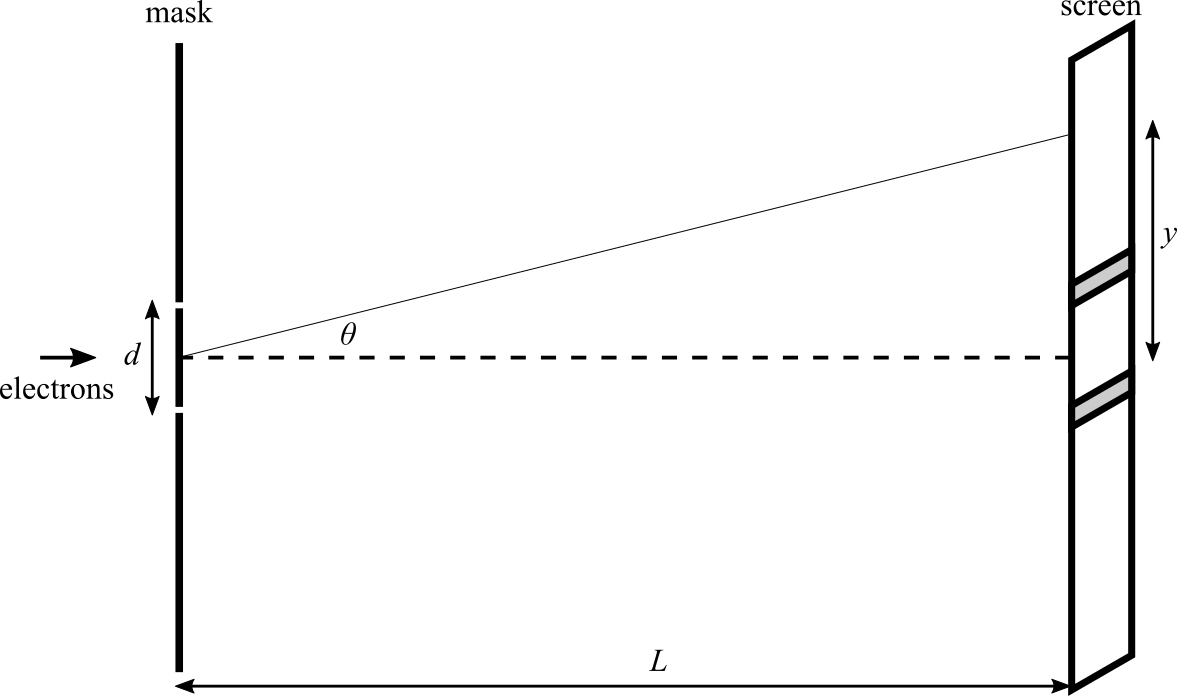
If the electrons behave like particles, they should travel roughly in straight lines through the two slits, forming two sharp spots on the screen, each corresponding to the electrons that traveled through one of the two slits.
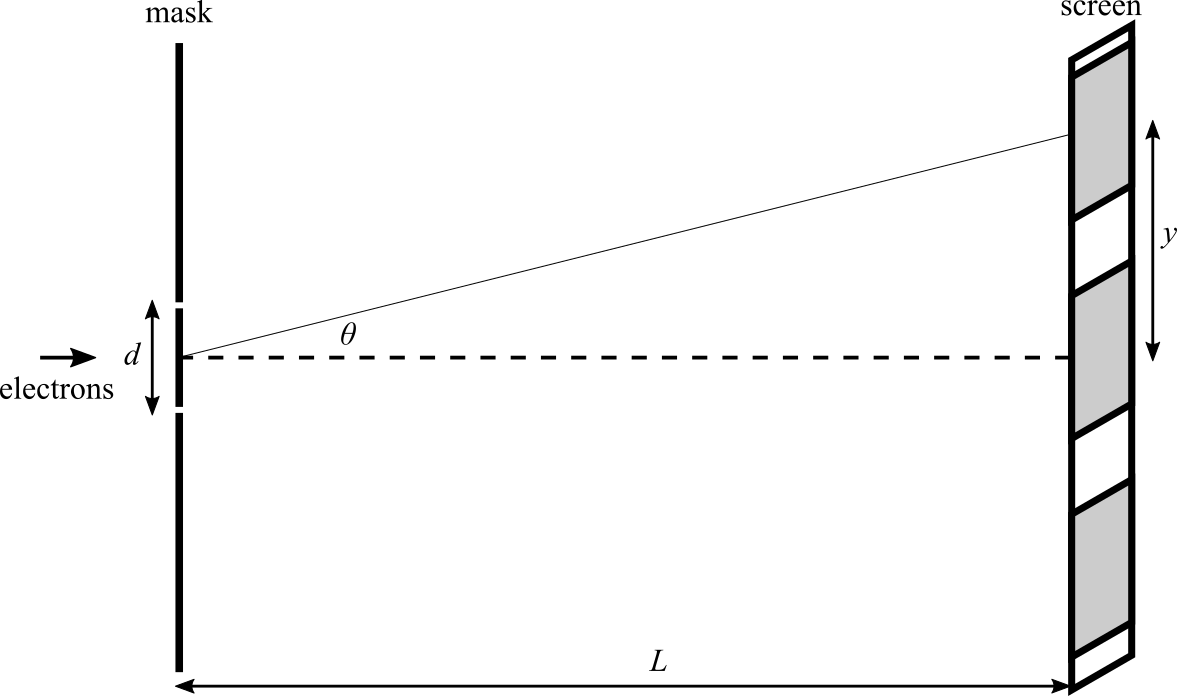
If the electrons instead behave like waves, they should produce an interference pattern, like that formed by light, causing several bright and dark spots to appear on the screen.
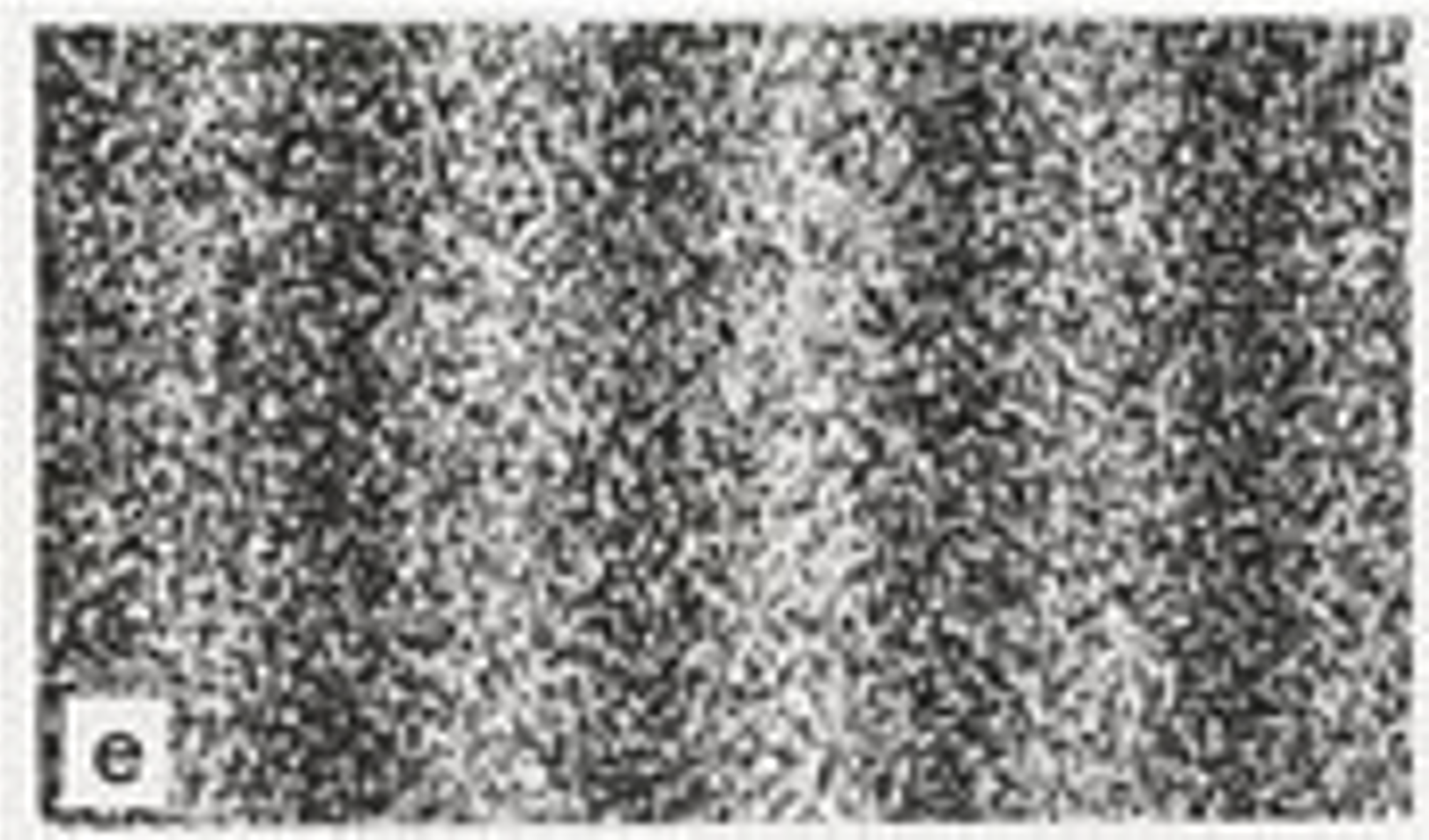
When the double-slit experiment is conducted with electrons, a potentially surprising result occurs: an interference pattern appears on the screen! An example of this result is shown below: the bright vertical strips correspond to the interference maxima, while the sparsely lit regions in between correspond to the interference minima.
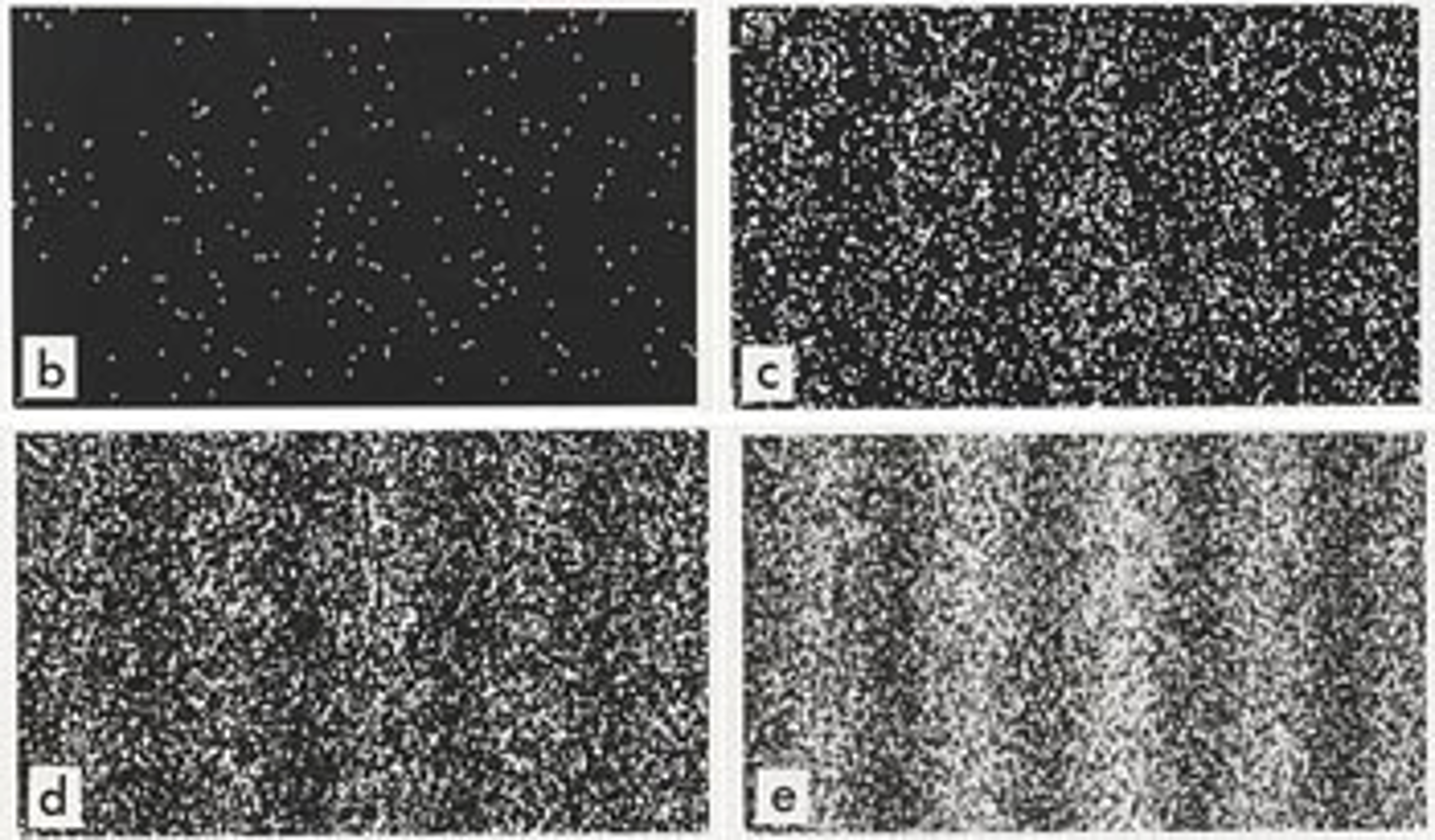
These results suggest that electrons, like photons, should be treated as waves, since they exhibit interference. In fact, since electrons are also known to exhibit particle-like behavior in other situations, they are subject to the same wave-particle duality as photons. While one possible interpretation is that electrons interfere with each other, the results of the double-slit experiment can be reproduced even using only one electron at a time (as shown in the figure below), indicating that each electron is interfering with itself! (The same self-interference is also observed with photons.)
Even objects with mass, such as electrons, protons, neutrons, etc., exhibit some properties that are wavelike, such as superposition and interference, and some properties that are particlelike, such as traveling in straight lines.
The Double-slit Experiment Results Figures, by Dr. Tonomura and Belsazar, are licensed under the Creative Commons Attribution-Share Alike 3.0 Unported license.