Learning Introductory Physics with Activities

Section 26.14 Challenge - Electric Circuits

Explanation 26.14.1. Circuit I.

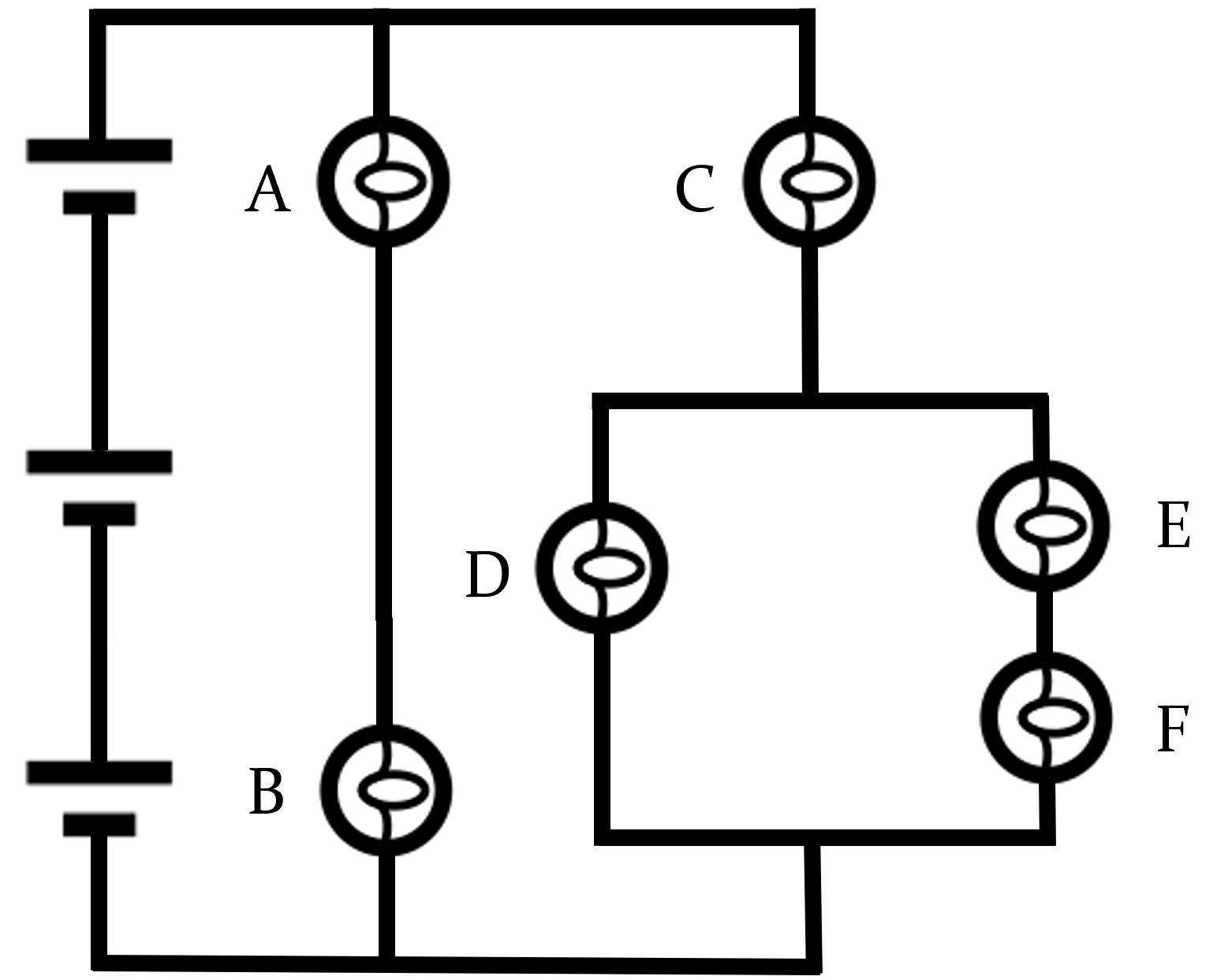
A circuit diagram with three batteries in series on the left.  The first vertical branch contains bulbs A and B in series.  The next vertical branch contains bulb C in series with a parallel network of bulb D and bulbs E and F in series.
Figure 26.14.1. Circuit diagram.
Rank the light bulbs shown above according to brightness. If any bulb does not light, or if you do not have enough information, state so explicitly.
In particular, explain your reasoning for how you ranked each of the following pairs of bulbs:
  1. A & B
  2. A & C
  3. A & D
Tip: Use voltage diagrams to help explain your reasoning.

Explanation 26.14.2. Circuit II.

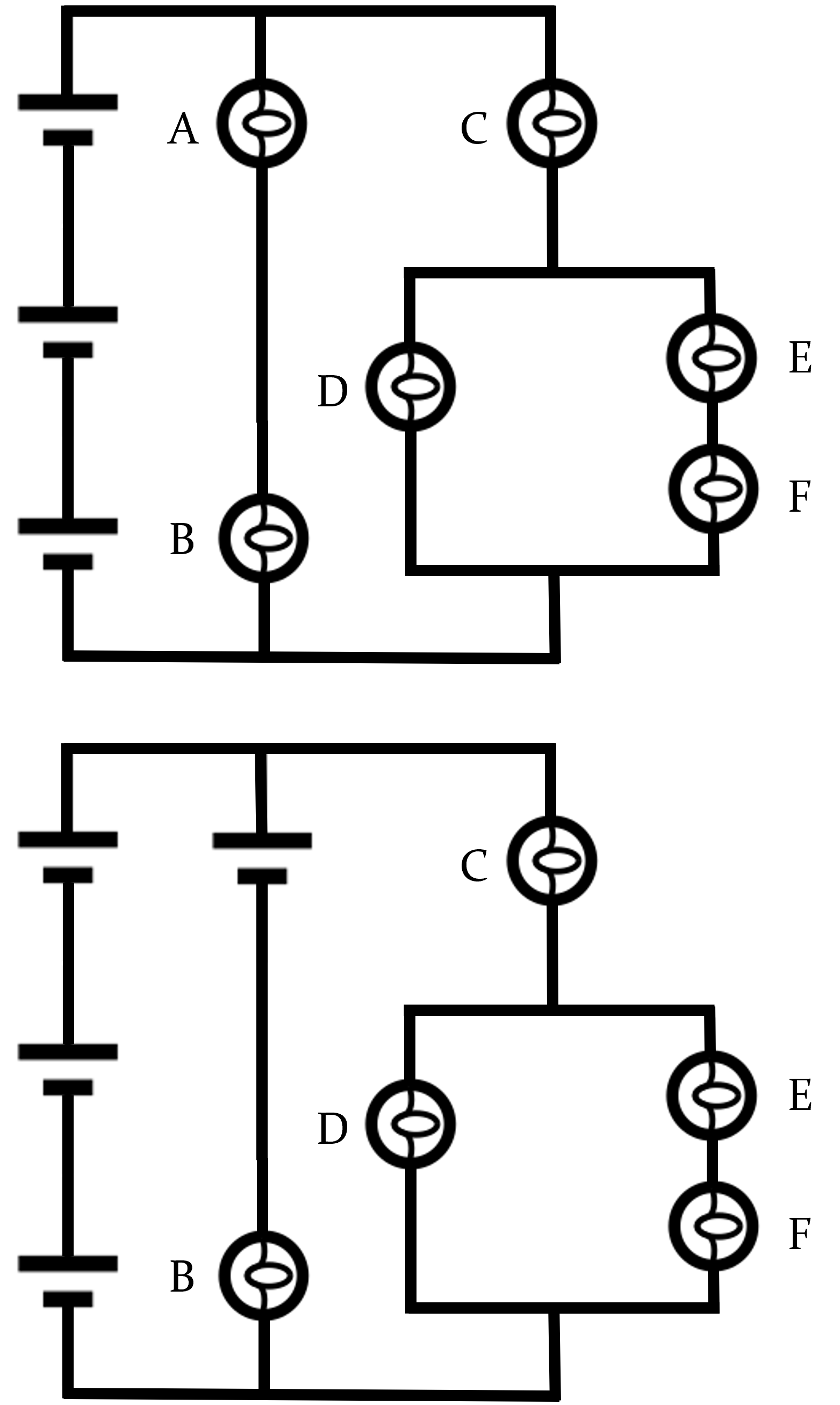
Above: A circuit diagram with three vertical branches, from left to right: three batteries, bulbs A and B in series, and bulb C in series with a parallel network of bulb D and bulbs E and F in series.  Below: the same diagram where bulb A has been replaced by another battery, oriented positive up.
Figure 26.14.2. Circuit diagram.
Bulb A in the top circuit is replaced by a battery, as shown in the bottom circuit. Does the brightness of light bulbs B and C increase, decrease, or remain the same? Please include separate claims and reasoning for each bulb.
Tip: Use voltage diagrams to help explain your reasoning.

Subsubsection Metacognitive Reflection

Activity 26.14.3. Light Bulb Model.

You built a model for circuits this week, based on the brightness of light bulbs. Restate the model here in your own words, and explain why you cannot use Ohm’s law for real lightbulbs.